
Intensity Infrastructure Partners and Rainbow Energy Center to Advance 36-Inch Natural Gas Pipeline Fueling Power Growth in North Dakota
- Oil, Gas and Energy
- Jan 6
- 2 min read
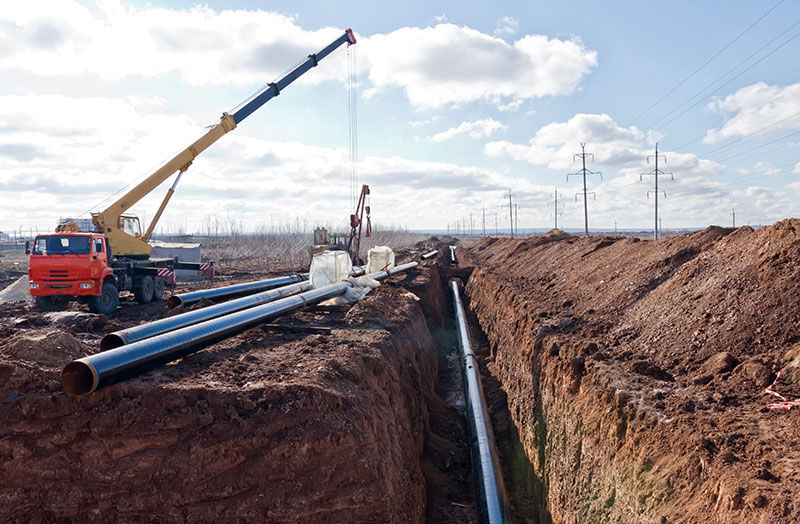
Building on the project framework previously announced in June 2025, Intensity Infrastructure Partners, LLC (“Intensity”) and Rainbow Energy Center, LLC (“Rainbow”) today confirmed that the firm transportation commitments contained in executed precedent agreements are sufficient to underpin the decision to advance Phase I of their 36-inch natural gas pipeline in North Dakota, reflecting growing confidence in the region’s long-term power and industrial demand outlook.
Intensity Infrastructure Partners (Intensity) and Rainbow Energy Center announced on January 6, 2026, that firm transportation commitments have secured Phase I of their proposed 36-inch natural gas pipeline project in North Dakota, targeting an in-service date in early 2029 to fuel power generation growth and industrial demand.
Project Overview
Phase I features approximately 1.1 million Dth/d initial capacity across a scalable system connecting Bakken production in western North Dakota (McKenzie County) to Rainbow's Coal Creek Station energy campus near Underwood, with eastward extensions supporting data centers, manufacturing, and grid reliability. The 344-mile backbone integrates multiple receipt points including Northern Border Pipeline, WBI Energy's network, and direct ties to six Bakken gas processing plants, creating a hub without compression fuel surcharges for transparent tariffs.
Strategic Partnership Drivers
Rainbow Energy Center, owner of the 1,100 MW Coal Creek Station (acquired 2022 with $250 million invested), anchors demand as North Dakota's power needs surge from data centers (2-3 Bcf/d incremental gas by 2030), industrial relocations, and MISO grid stability. Intensity Infrastructure Partners—backed by EIV Capital and led by veterans with 2,000+ miles of Bakken/Permian pipe experience—provides midstream expertise, advancing from June 2025 framework following strong open season response.
Bakken Gas Monetization
The project captures stranded associated gas from Williston Basin's 6+ Bcf/d output, reducing flaring (down to 5% targeted), enabling in-state processing, and positioning North Dakota as a gas-fired power exporter amid U.S. LNG ramps (16 Bcf/d 2026). Uncommitted capacity supports incremental gas plants along the corridor, leveraging existing transmission without duplicative greenfield builds.
Phased Scalability
Phase I's excess design capacity allows expansion without new pipes as demand materializes—data centers first, then industrials—mirroring Permian/Haynesville LNG prioritization over powergen. Continental Resources' Jeff Hume praised the integrated upstream/midstream/power model for meeting tech-driven loads reliably.
Regional Energy Context
North Dakota's gas production aligns with national trends outpacing oil demand: Henry Hub $4.01/MMBtu 2026 forecast supports viability amid Permian (28 Bcf/d) and Haynesville (15.6 Bcf/d) ramps feeding LNG terminals. Trump's FERC fast-tracks and One Big Beautiful Bill aid permitting, countering Appalachia constraints.
Investment Implications
Midstream Winners: Energy Transfer (ET), DT Midstream analogs benefit from Bakken takeaway; Intensity's EIV backing signals PE inflows.Upstream Exposure: Continental Resources (CLR private), Ovintiv (OVV), Hess Midstream (HESM).Power Plays: Gas-fired IPPs like Rainbow position for ERCOT/PJM-like data center contracts.Trading: Covered calls on ET (5-6% yield), UNG spreads for gas/oil divergence ($51 WTI vs. $4 gas).
Broader U.S. Gas Momentum
Pipeline unlocks Bakken like LEAP does Haynesville, supporting LNG exports (Golden Pass/PLA) over domestic power amid Permian EOR recycling. Venezuela oil shocks add crude volatility, but gas fundamentals shine through 2026 glut. North Dakota's hub cements energy independence.


Comments